Applications
os8088 ships two floppies. The first one boots; the second one is the software, and everything on this page comes off it. Eleven programs, in two folders, on a FAT12 volume any modern machine can also mount and write: eleven separate binaries totalling about 66KB, in a system whose whole kernel is 52,718 bytes.
None of them are built in. A program is a flat binary with a 32-byte header, assembled to run at offset zero and never relocated: the loader takes a claim off the heap, reads the file into it, zeroes the program's uninitialized data and far-calls its entry point with the segment registers pointing at the program's own segment. From there it lives exactly as the system's own windows do -- it gets a window, a dock tile, a row in the Task Manager, its own menus on the menu bar and, if it asks for one, a pre-emptively scheduled background task of its own. Closing it frees the region and every claim it made. Several can run at once, and more than one copy of the same one can.
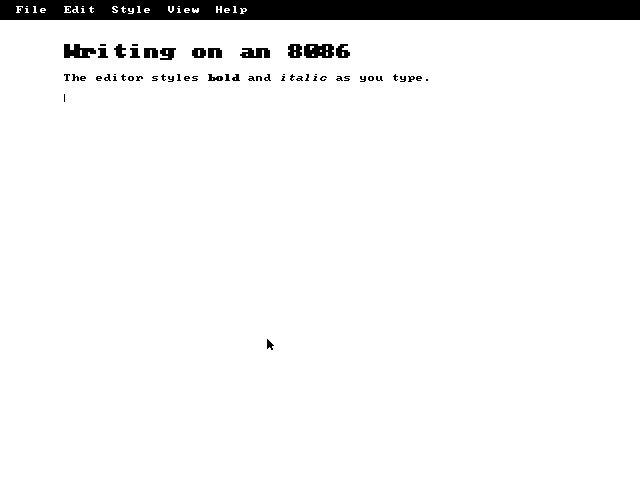
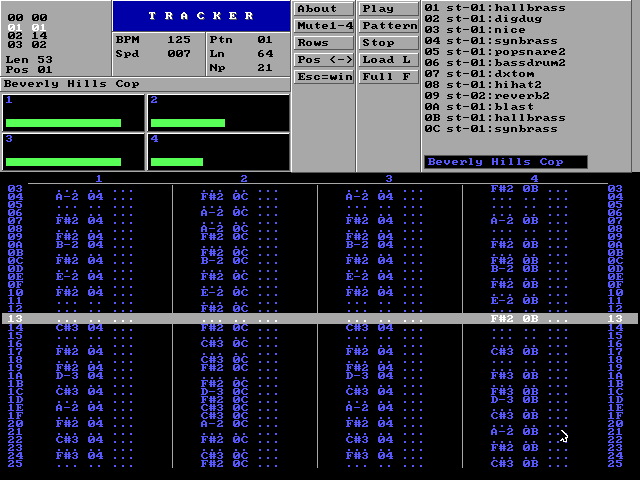
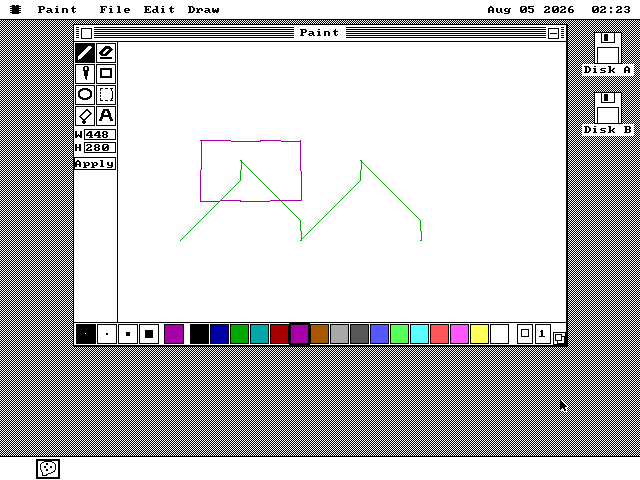
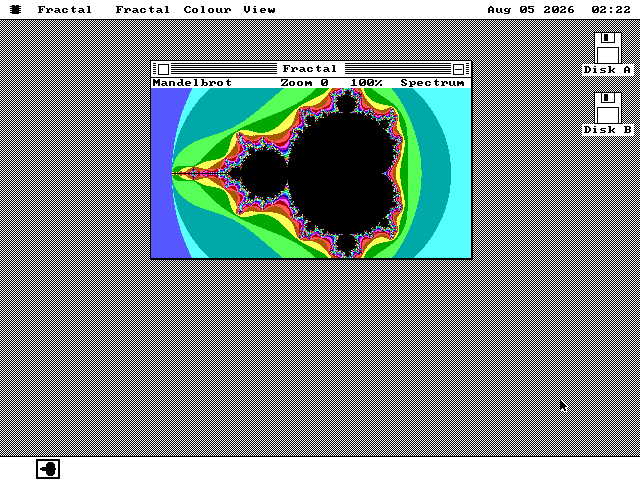
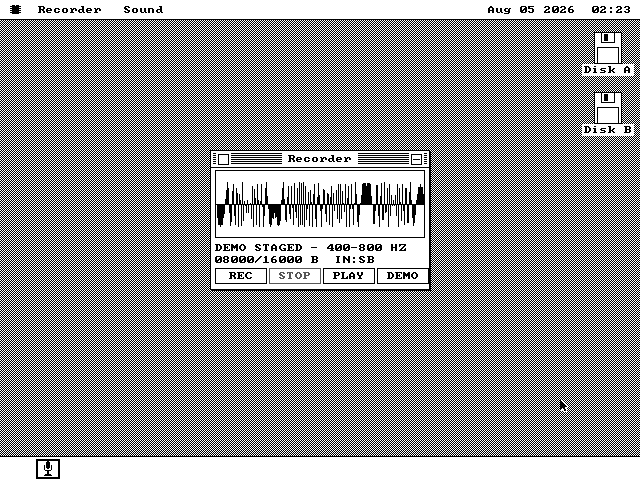
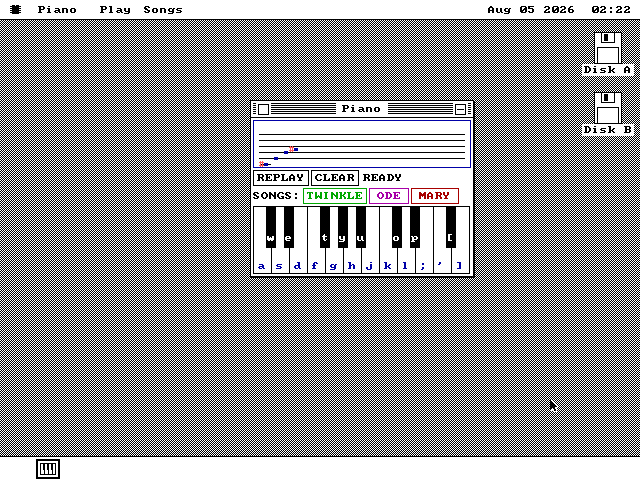
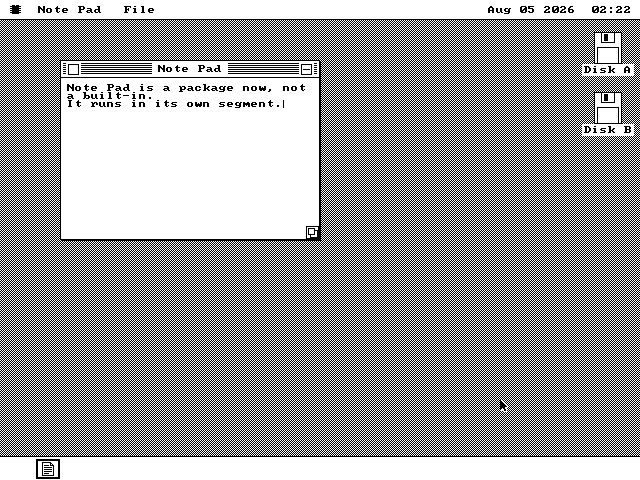
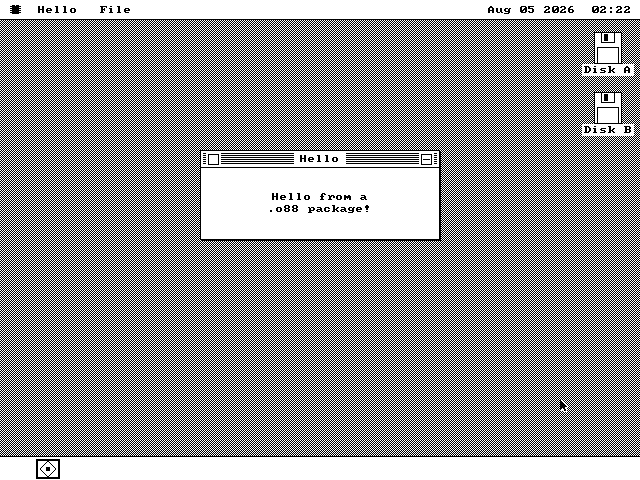
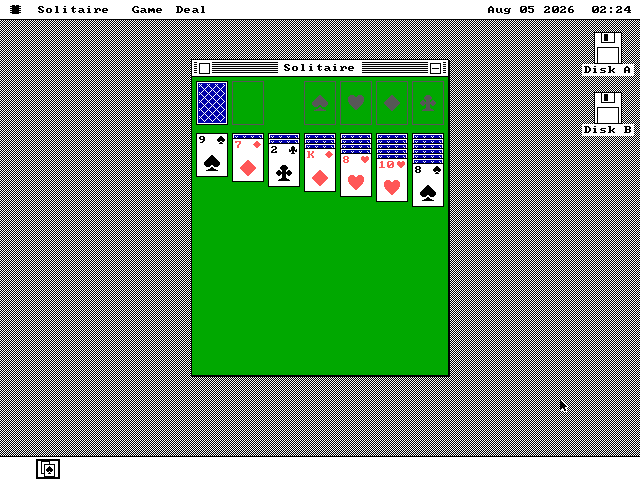
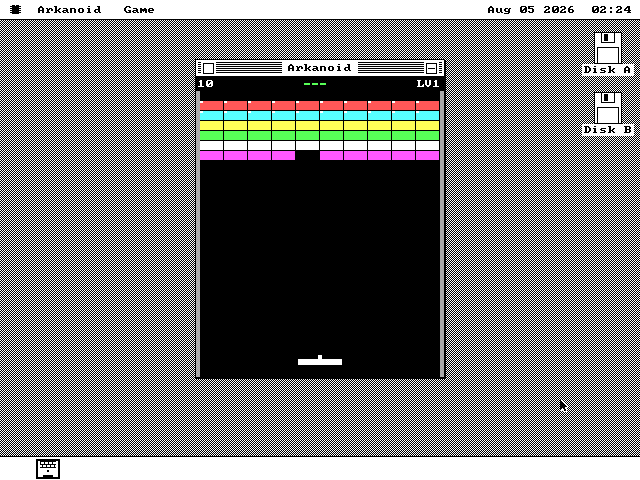
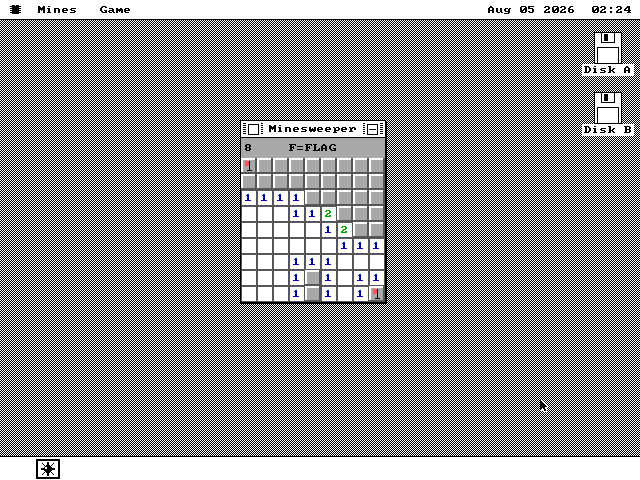
Every image below is a screendump of the real system running in an emulator, captured by a script that double-clicks the program out of the Disk window, closes the Disk window behind it and then drives the program itself -- typing, clicking keys, drawing, dealing and serving. Nothing here is a mockup. The interface is black and white; where you see color, the program is using it.
The APPS folder
Eight programs and one data file. Two of them exist mainly to prove something about the system underneath -- and two of them are the largest pieces of software in the tree.
The GAMES folder
Three of them, and each one arrived by needing something the system could not yet do.
Running them yourself
Download both images: boot the machine from os8088.img
and give it apps.img as its second floppy. Double-click the Disk B icon on
the desktop, open APPS or GAMES, and double-click a program. It will
be on screen in about a second on an emulator, and rather less briskly on a real XT.
The software disk is an ordinary FAT12 volume, so you can also mount it on any modern machine and copy programs on and off it -- and since os8088 writes FAT12 as well as reads it, files you save from Paint or Note Pad come back off the same disk on your own computer. Writing one of your own is the packages page.