On real hardware
Every other picture on this site is a screendump taken out of an emulator. These are photographs, of real machines, in somebody's actual house. os8088 was written for the IBM PC/XT and tested in QEMU and 86Box, which is not the same thing as knowing it works -- an emulator implements the hardware you thought about. A room full of 1981 metal implements the hardware that shipped.
All seven photographs on this page were taken by Elendilon, who wrote the 360K disk images onto real floppies and booted them on three different machines over two days -- then filed a careful, generous list of everything that went wrong in issue #35. The photographs, the hardware, the patience and the bug reports are all theirs. Thank you.
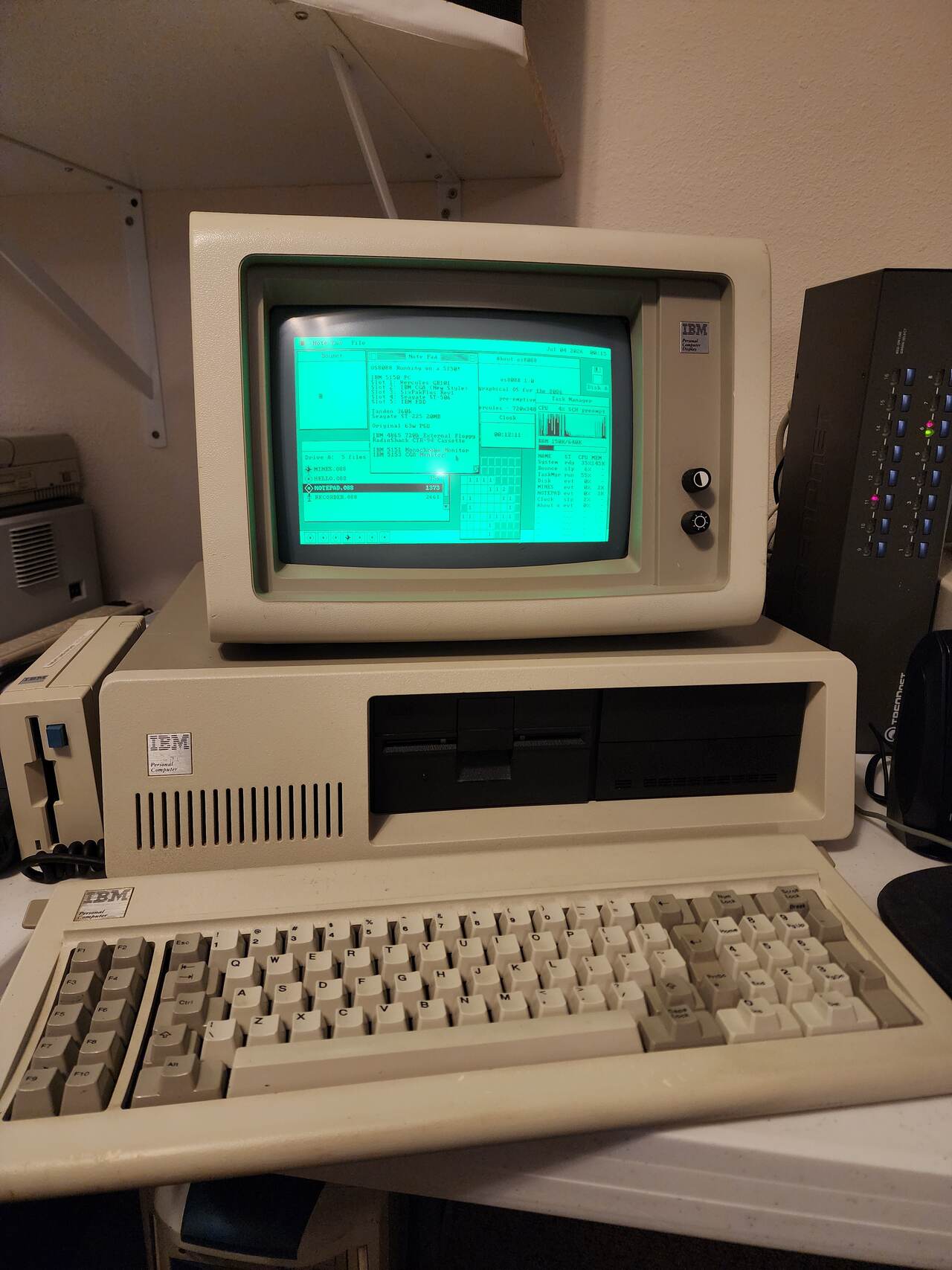
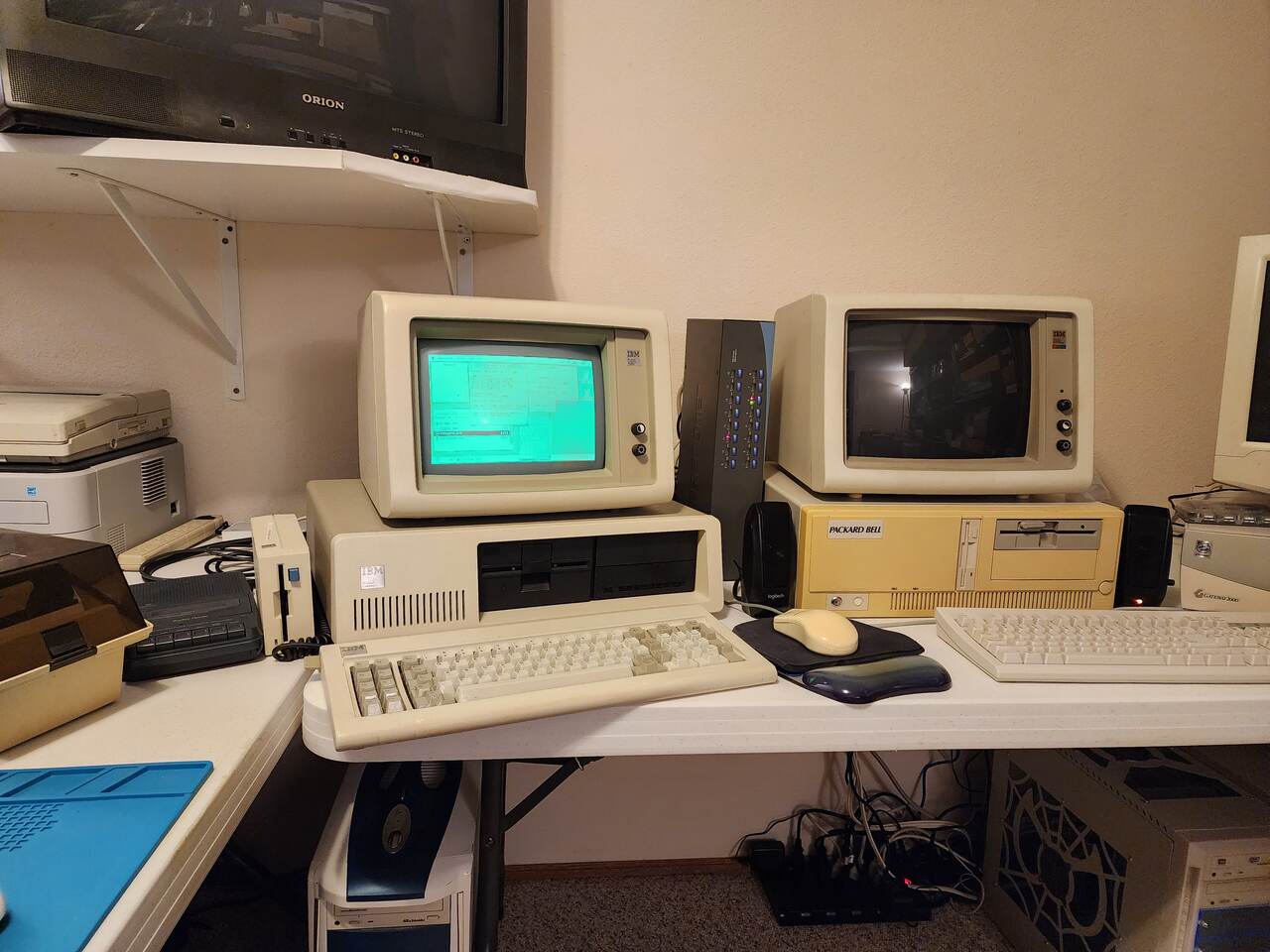
An IBM 5150, in Hercules
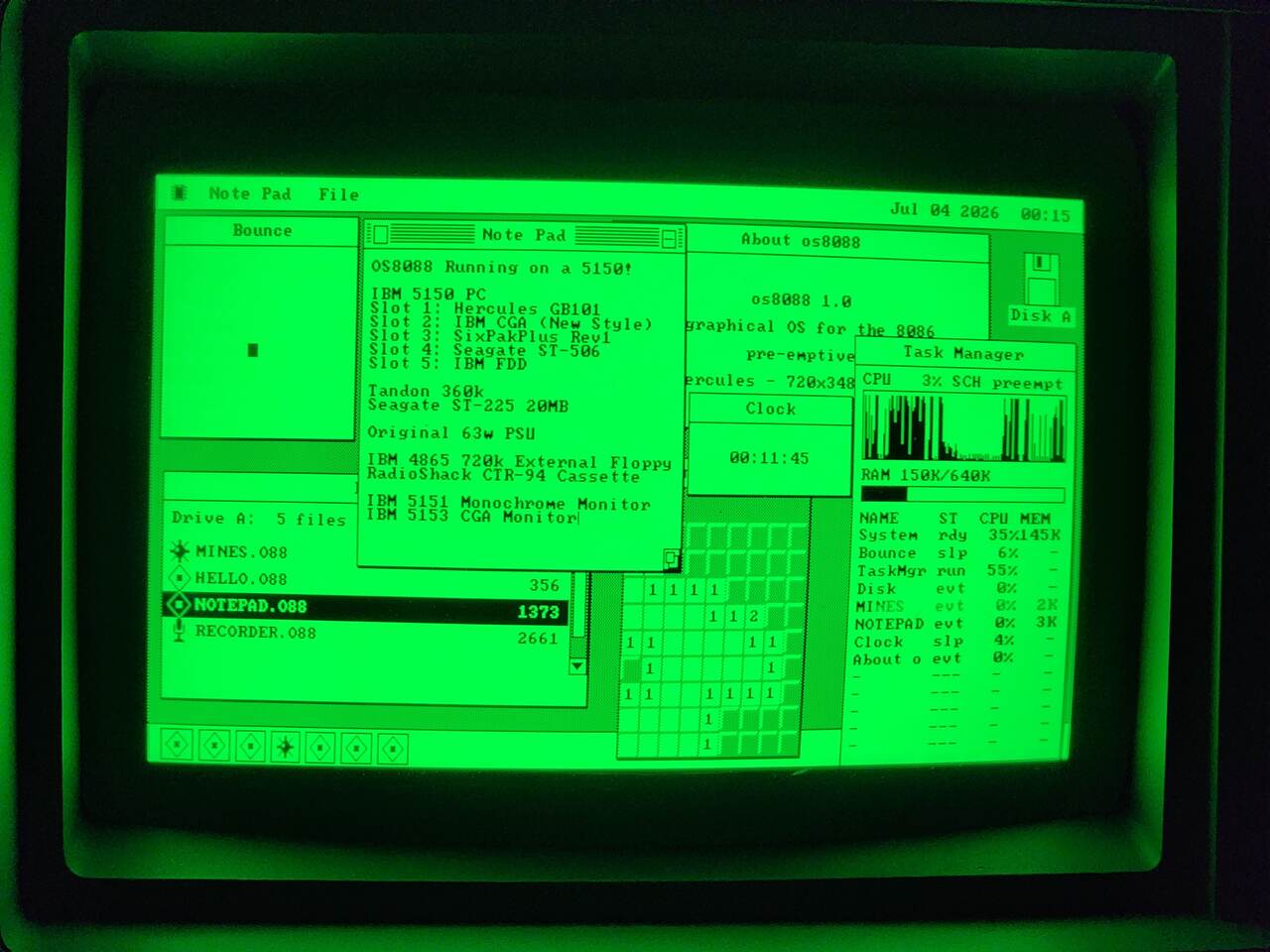
The original 1981 IBM Personal Computer -- an 8088 at 4.77MHz, the machine os8088 is named after and aimed at. Booted from a Tandon 360K drive off a floppy written from the published disk image, onto a green IBM 5151 through a Hercules GB101 card.
OS8088 Running on a 5150!, and then the slots: Hercules GB101, IBM CGA, a
SixPakPlus, the MFM controller and the floppy card -- typed into Note Pad, which is a
1,373-byte package that was itself loaded off the floppy this machine booted from. Behind
it the About box reads Hercules - 720x348, which is not a string constant
either; it is the display mode the kernel probed for and chose at boot. Six programs are
resident at once on a 4.77MHz 8088, and the Task Manager puts the machine at 3%.
(The card list says ST-506 in slot 4; its author corrected that to a Seagate ST11M
shortly after posting.)
It is not slower than the emulator. The photographer's own summary: "Surprisingly there is no noticeable performance difference in Hercules as compared to the VGA mode (with VGA running in an emulator)." That is the answer to the question this project cannot answer by itself -- whether the drawing code is fast enough on the metal it was written for, or only fast enough on a modern CPU pretending to be that metal.
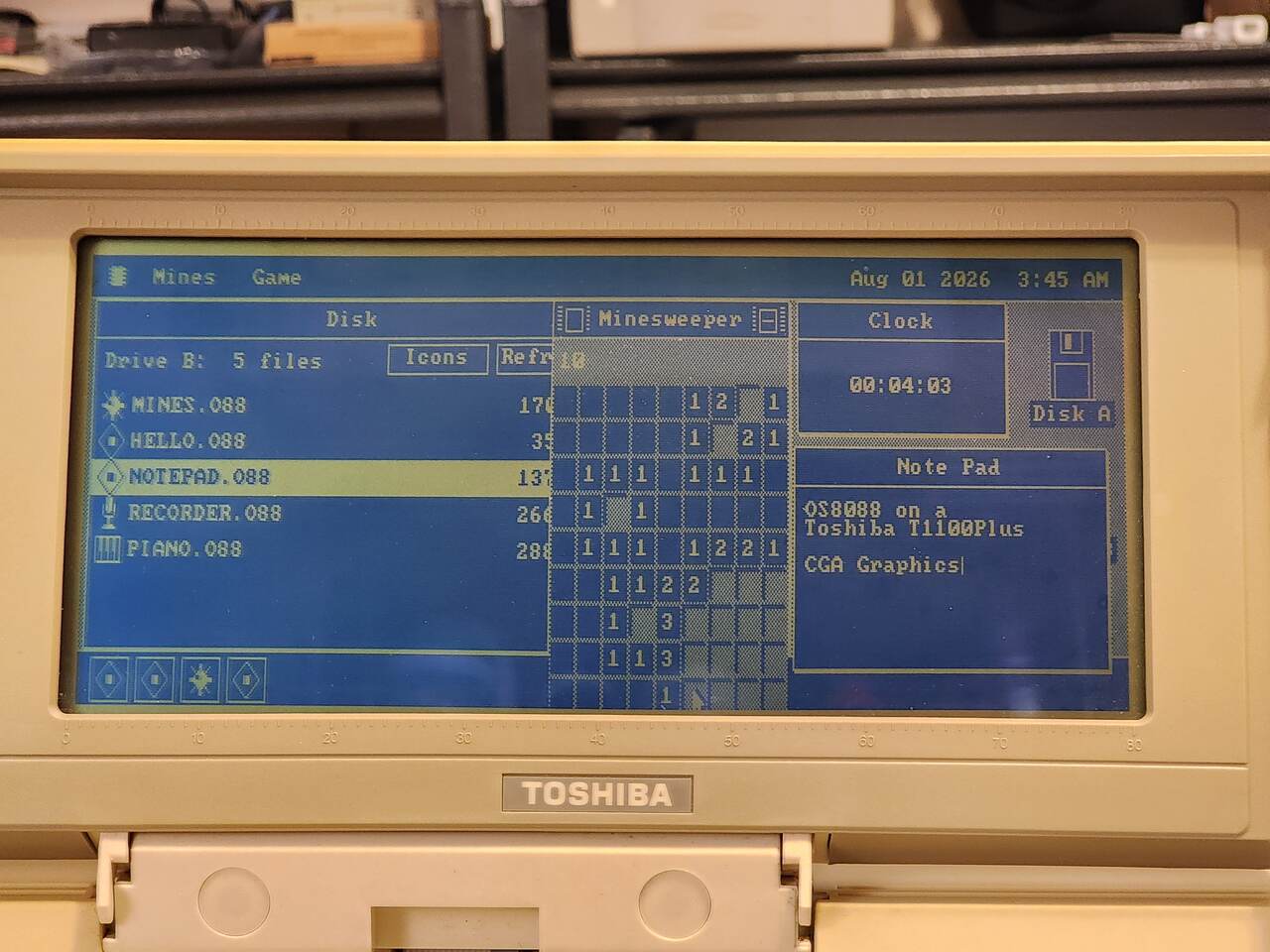
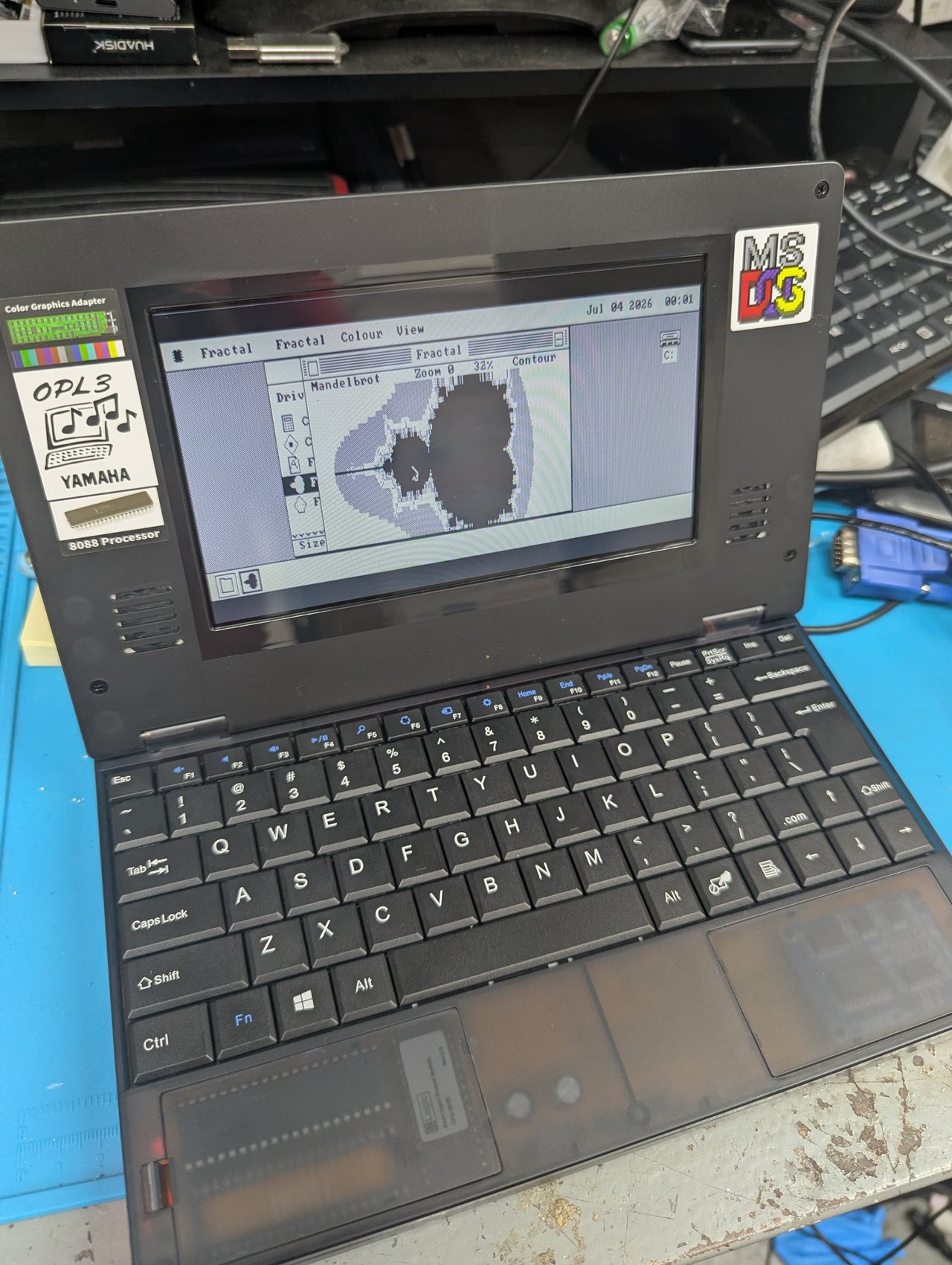
A Toshiba T1100 Plus, in CGA
A 1986 luggable with a 7.16MHz 8086 and a blue supertwist LCD, running the CGA driver at 640x200. The 360K images were written onto 720K floppies to get them in.
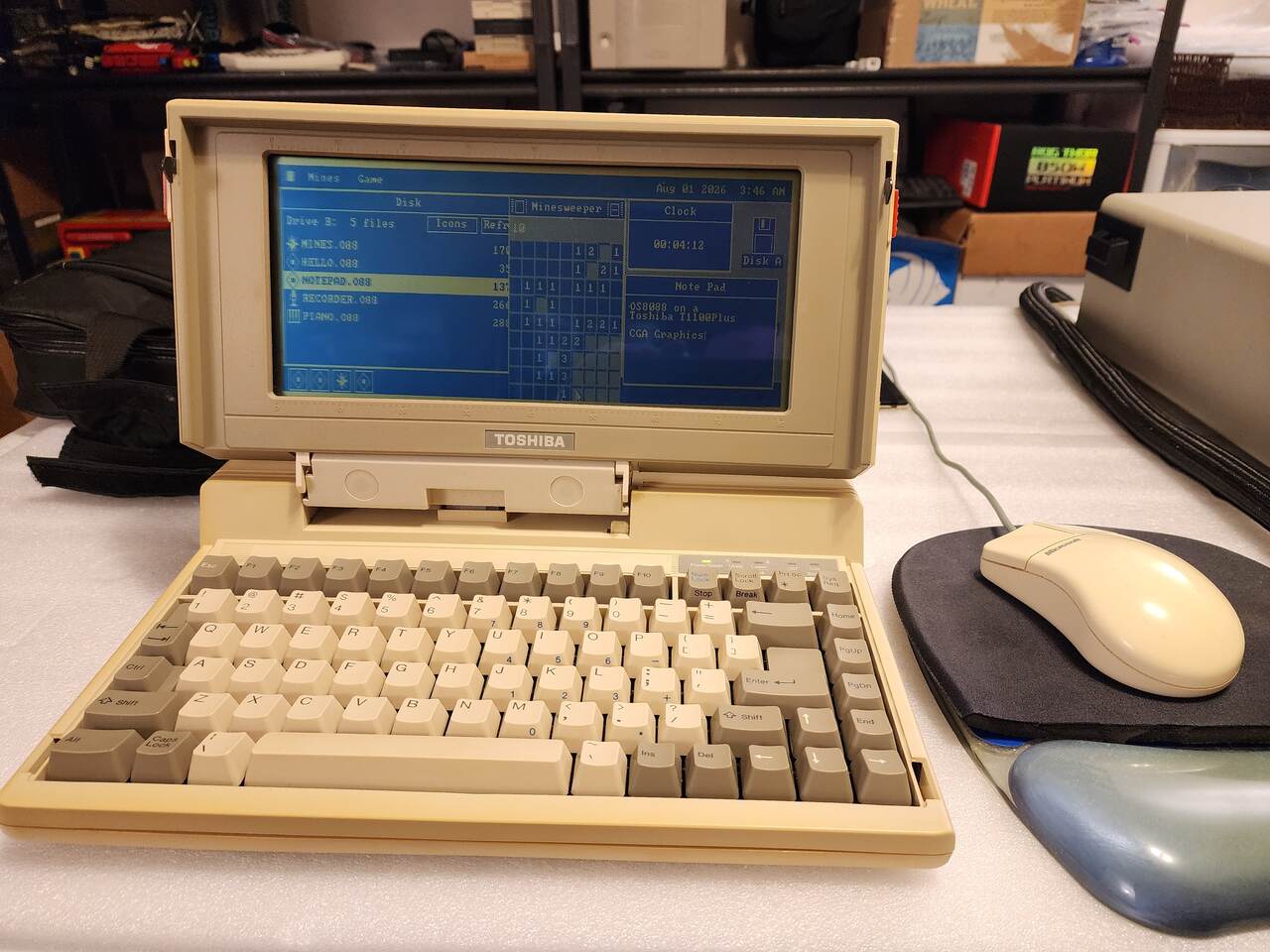
Aug 01 2026 3:45 AM, and that is the wall clock: the
T1100 Plus is the one machine of the three whose real-time clock os8088 managed to read.
It could not write back to it, so the setting did not survive a reboot. This board is also
where the task bar bug was found -- a CGA Minesweeper window is tall enough to overlap the
dock, and clicks in the overlap go to the dock instead of the game, so it cannot be
finished.A 286, in VGA
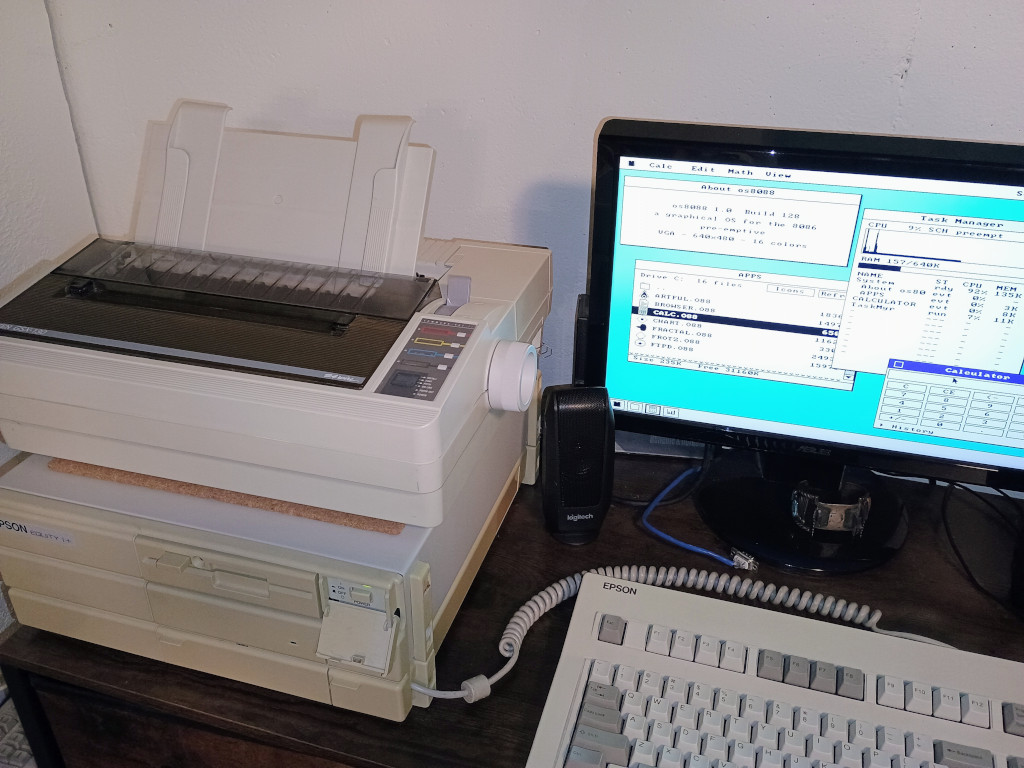
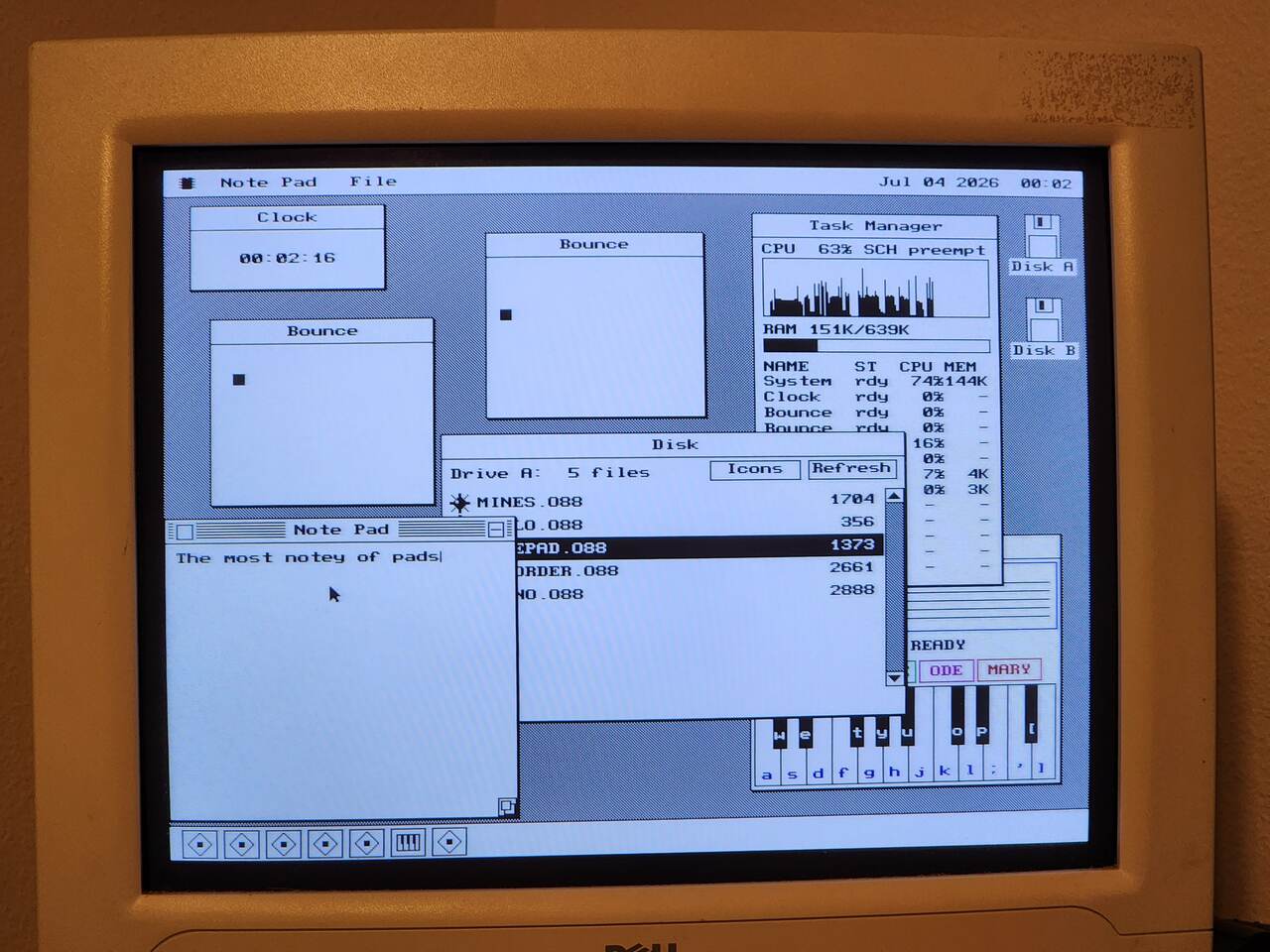
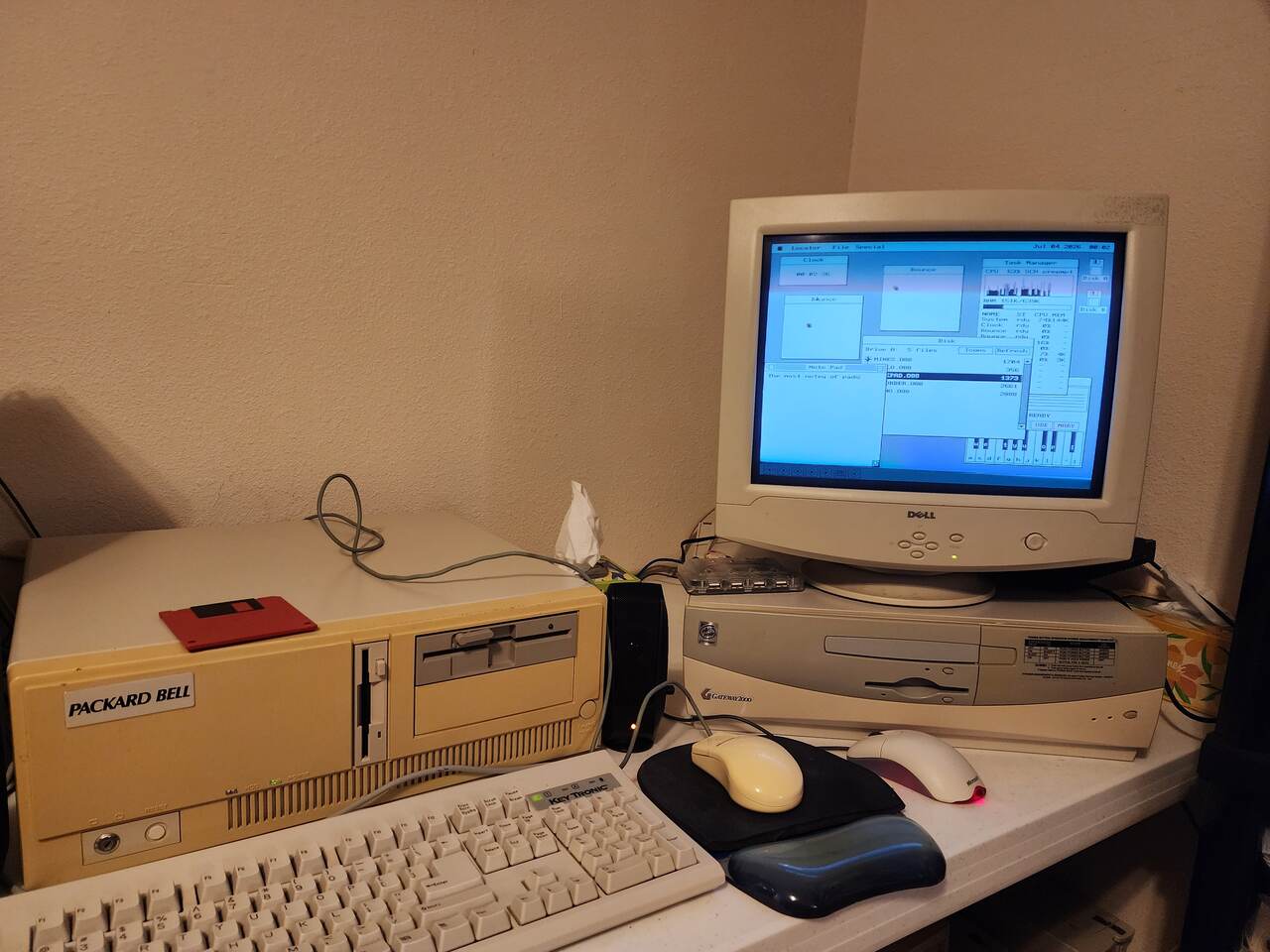
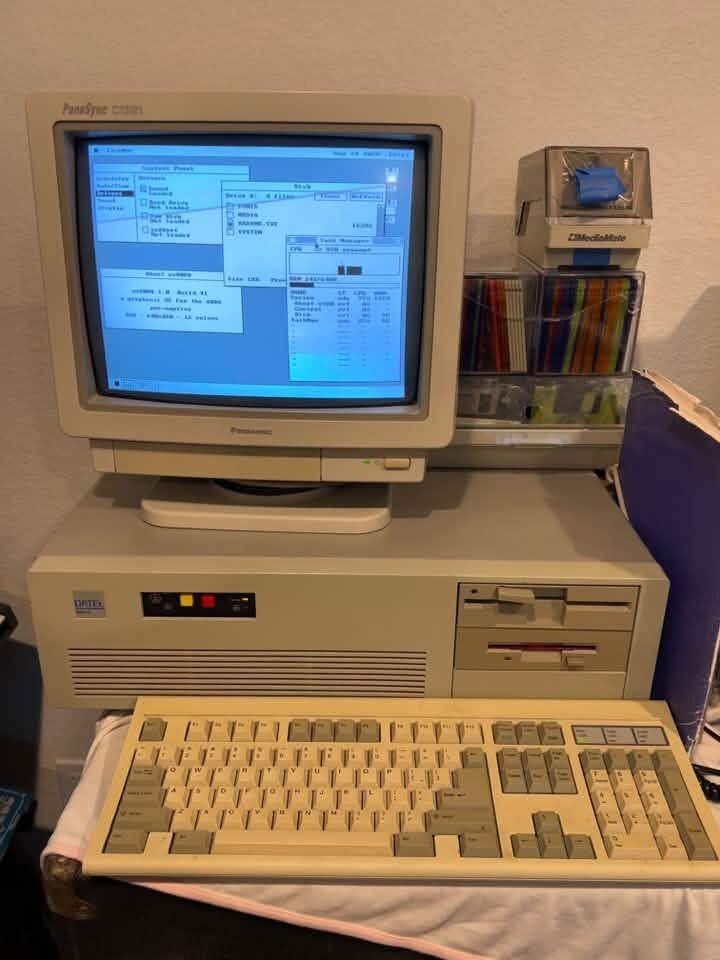
The first round of testing, on a Packard Bell Victory 286 and under PCEM, with a VGA card and the full 640x480 mode 12h desktop -- the mode every other screenshot on this site is taken in, this time on a CRT.
Two of the three machines could not tell the time. The menu bar in the
photographs above reads Jul 04 2026 on both the 286 and the 5150, which is
os8088's fallback, not a clock. Neither the SixPakPlus in the 5150 nor the 286's RTC was
read. This is a fair hit and a narrow one: os8088 reads the AT-standard clock at ports
70h/71h, which is what a 286 has and what an XT-era clock card generally is not -- the
SixPakPlus puts its clock somewhere else entirely. The Toshiba answered, which is why its
photographs show a real date.
What the metal found
Three real machines are a better test suite than an emulator, and this is the list they produced -- every item below came out of the same report as the photographs. It is recorded here because the pictures are the fun part and the bugs are the useful part.
- A window that is partially covered does not repaint at all until it is uncovered.
- Clicks landing where a window overlaps the dock go to the dock, not to the window, even when the window has focus -- which makes Minesweeper unfinishable in CGA.
- The Note Pad caret cannot be moved; it stays at the end of the text, in the editor and in the save dialog both.
- File, then Save keeps the name you saved under but forgets the folder, and writes to the root.
- The Save As dialog can enter and leave a folder but cannot create one.
- Deleting a folder with anything in it reports
Protected, which is not what is wrong with it. - Backspace in the new-folder field clears a character and then refuses further typing.
- Refreshing in Locator drops you back at the root of the drive.
- The Task Manager's per-row percentages and its graph do not tell the same story.
- Seven programs share one generic icon, so the dock is hard to read.
- Focusing a window by its title bar redraws the screen twice instead of once.
- Neither the 5150's SixPakPlus clock nor the 286's RTC could be read, and the Toshiba's could be read but not written.
The full report, with the reasoning behind each one, is issue #35. If you boot os8088 on something it has never seen, that is where to say so -- especially if it does not work.
Put it on your own hardware
The download page has 360K images that fit a period drive, which is what was written to floppies for every machine on this page. You need an 8086 or 8088, 256K of RAM, one floppy drive and a VGA, Hercules or CGA card. A serial mouse is optional and worth having.