Packard Bell Victory
Desktop
A 286 desktop playing full-screen video in the Video Player with no frames dropped or cut.
os8088 on real hardware
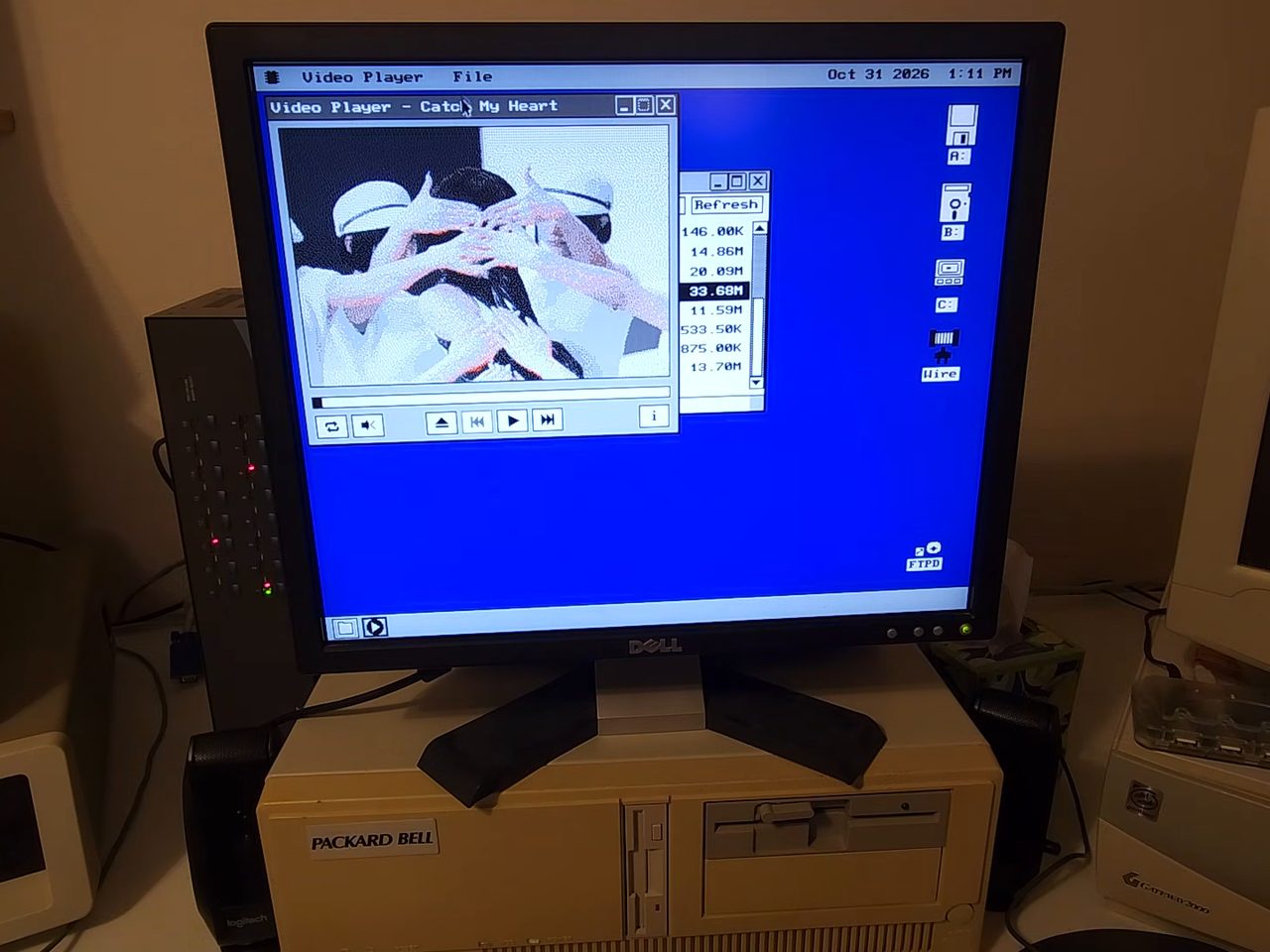
See it running
View all photos & details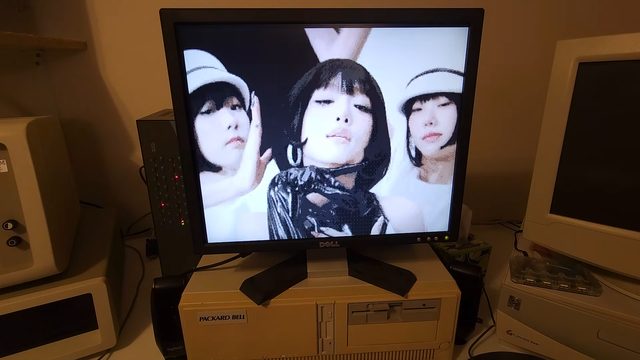
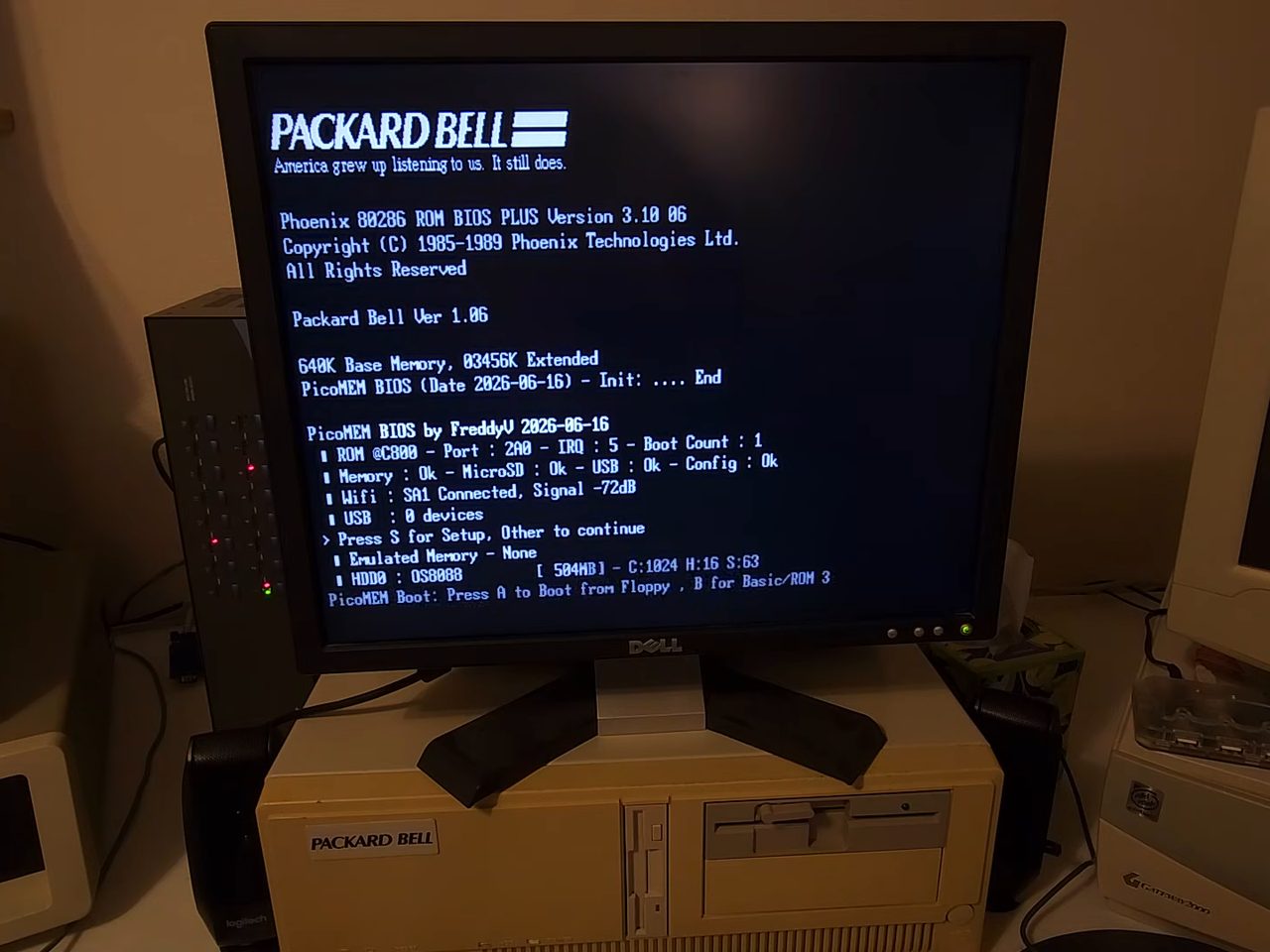
- CPU
- AMD 286, 16MHz
- RAM
- 4MB, 100ns
- video
- Paradise PVGA1A, 256KB
- bus
- ISA, 8 wait states
- disk and sound
- PicoMEM V1
- playback
- 30fps, full screen
Manuals & resources
All sources & referencesRunning os8088?
Share photos of your setup with the community. Open a GitHub issue and attach your images.
Submit your photos on GitHubHistory, photos & source references
One card is the hard disk and the sound card
A PicoMEM in an ISA slot, doing two jobs.
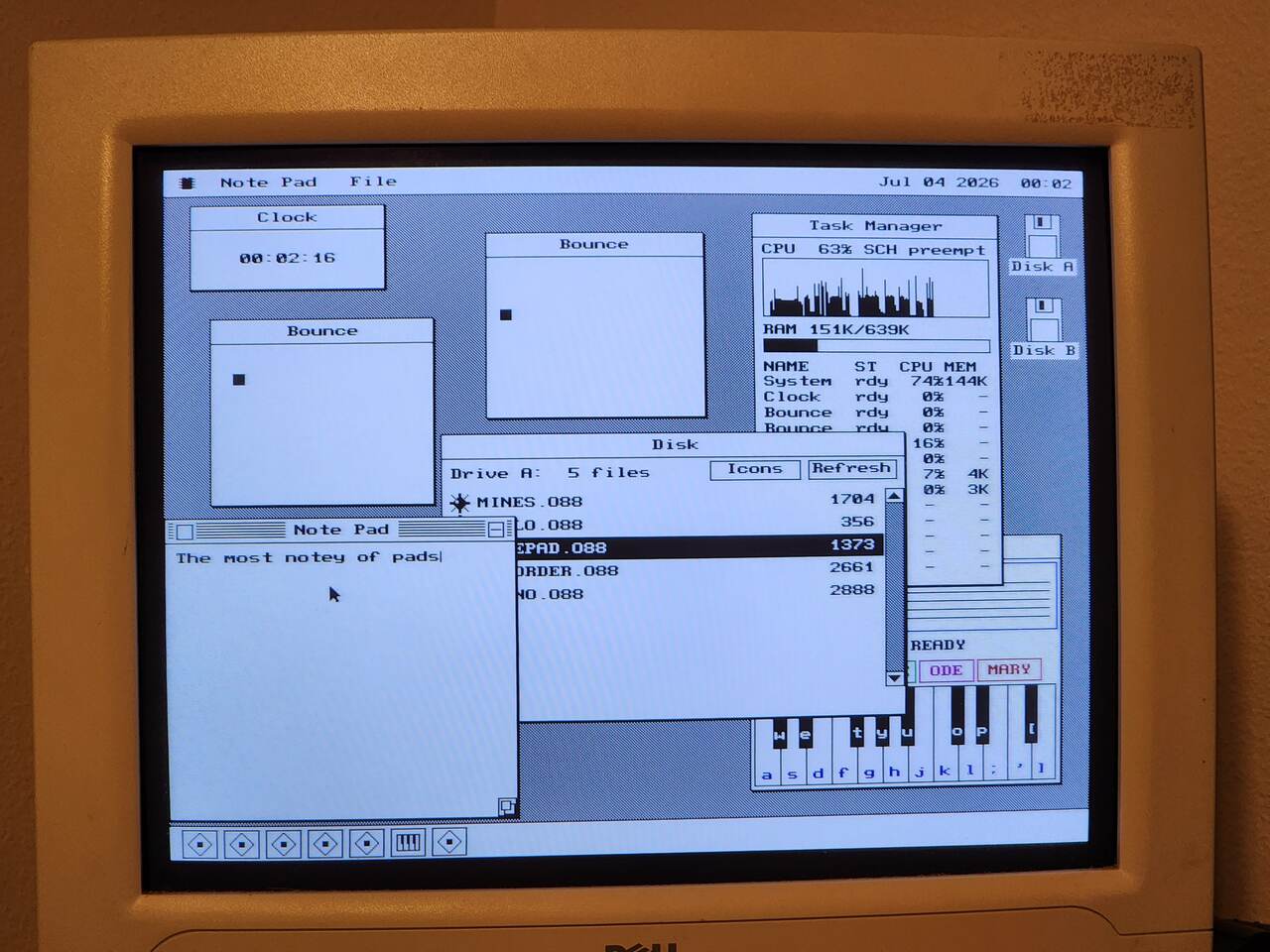
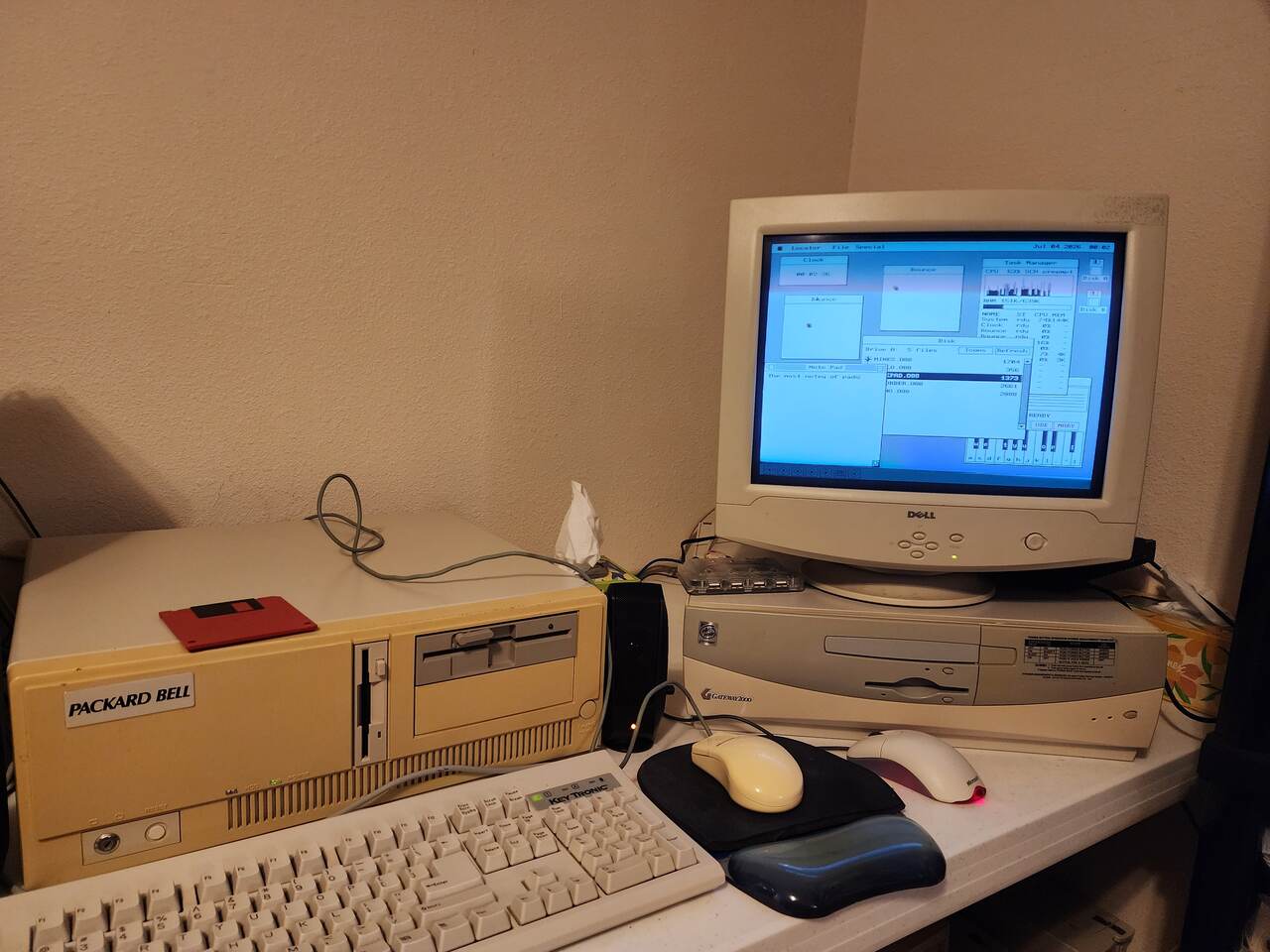
A PicoMEM card does two jobs here: it is the hard disk, at about 500KB/s -- close to the 102MB drive the machine came with -- and it is the Sound Blaster 2.0. The video was filmed on an LCD, because the phone's camera and the CRT did not agree.
OS8088. Still from the
video by AcornsN64.
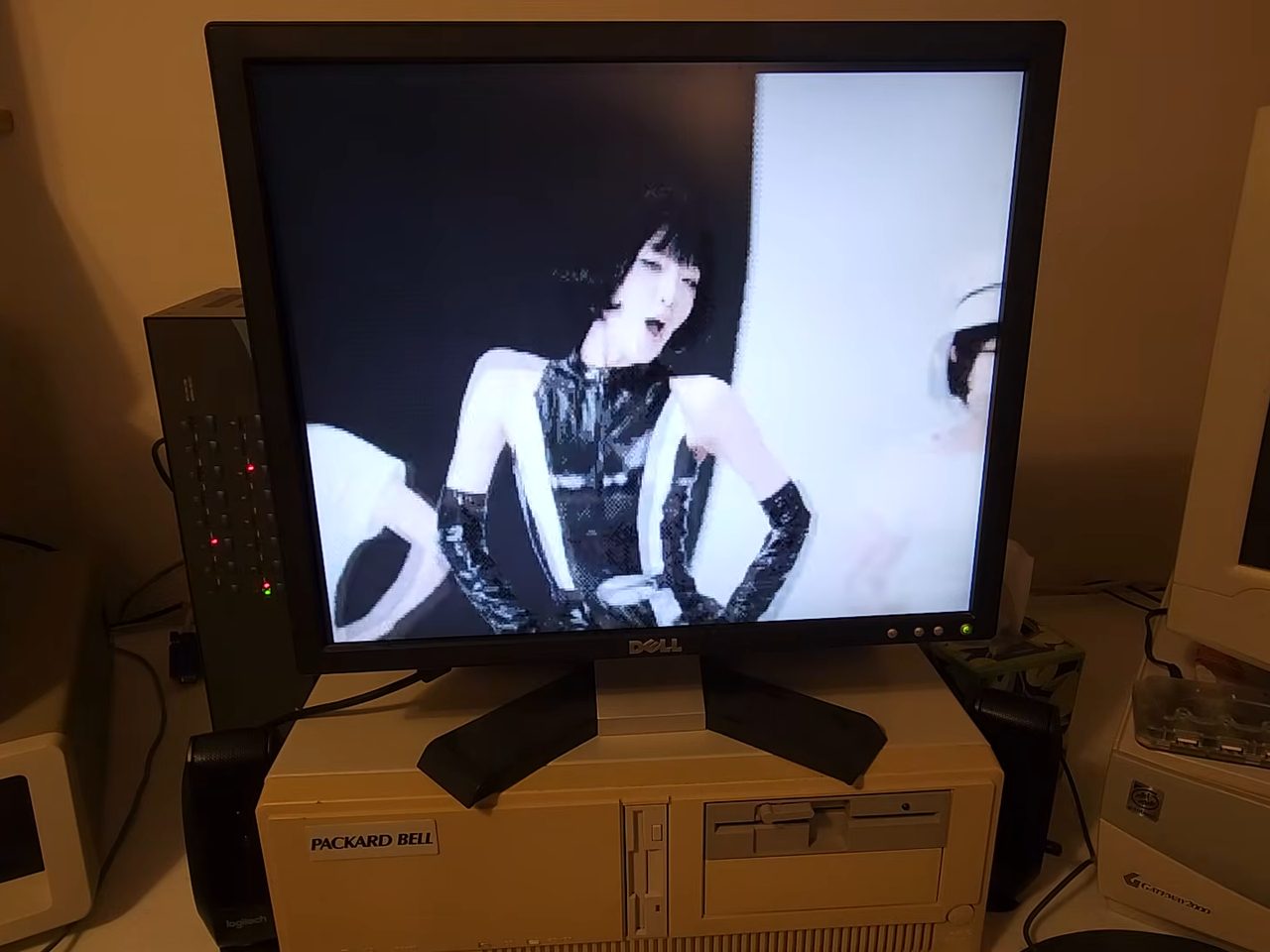
On a CRT, in the mode every screenshot here is taken in
The same machine on a different monitor.
A store-shelf 286 with its VGA soldered down
The board under the PicoMEM, and who it was sold to.
Packard Bell did not sell through computer dealers. Its 286s went out through Montgomery Ward, Wal-Mart, Best Buy, Circuit City, Silo, Costco and CompUSA, and by its own count it shipped more IBM compatibles in the United States in 1991 than anyone but IBM (an outside estimate quoted by UPI put it only fifth among all personal computer makers, with 3.4 percent of 1990's IBM-compatible sales). A machine for that shelf had to work out of the box, and the Victory's board has the hard disk, floppy, serial, parallel, mouse and VGA ports on it before a card goes in.
Most of the silicon is Western Digital's. The Retro Web's entry for the board identifies an FE3600 chipset beside the Paradise video chip, and Paradise had been a Western Digital company since 1986. The video memory is soldered: enough for 800 x 600 in 16 colors, not VESA compatible and, in the words of the board's data sheet, "not upgradeable", though jumper W11 turns it off for anyone fitting a card. The slots are not on the motherboard at all but on a riser, and a board that has lost its riser takes no cards. The part that fails is the Dallas DS1287 clock, whose battery is sealed inside it.
The faster of the two clock speeds needed somebody else's processor: Intel's own 286 stopped at 12.5MHz, and it was AMD and Harris that took the design on to 20 and 25. The PicoMEM is FreddyV's 8-bit ISA card built around a Raspberry Pi Pico. It does not imitate a disk controller; it answers the BIOS's disk calls from image files on a microSD card. Its Sound Blaster on this first-generation card is a memory copy on an interrupt standing in for DMA, which the author rates "low" for compatibility, and his list of failing machines includes some fast 286s. This one is not among them.
- CPU as sold
- 80286, 12 or 16MHz
- chipset
- Western Digital FE3600
- RAM as sold
- 1MB, to 4MB on SIMMs
- slots
- four 16-bit, one 8-bit, on a riser
- disk
- IDE on the board
- power supply
- 145W
Sources
- Packard Bell VICTORY The Retro Web. The board: its chipset, video chip, clock speeds, riser and the DS1287.
- Packard Bell Victory M/Board pb.retropc.se. Slots, memory, power supply, jumpers and the soldered video memory.
- PACKARD BELL VICTORY Total Hardware 99. The 12 and 16MHz versions and the connectors.
- Catch Catch on a 286 16Mhz Packard Bell Victory AcornsN64 on YouTube. The owner's description of this unit.
- Packard Bell Electronics seeks to go public Dave McNary, UPI, March 17, 1992. The retailers, the shipments and the market share.
- ISA PicoMEM Extension board FreddyVRetro on GitHub. What the PicoMEM is, and how it does a disk and a Sound Blaster.
- PVGA1A Video Graphics Array Device Western Digital, 1991 data book. The video chip's modes.
- Intel 80286 Wikipedia. The AMD and Harris parts above Intel's 12.5MHz.